


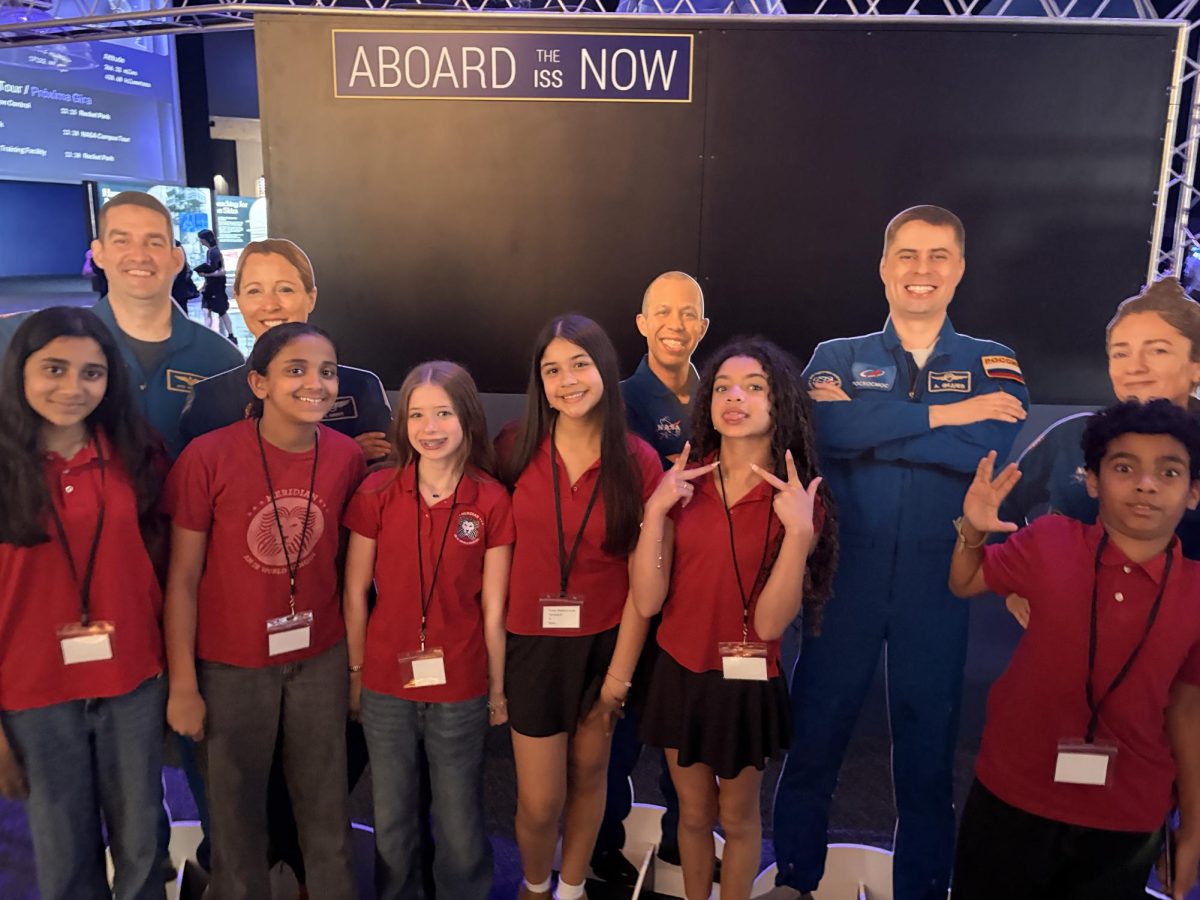
On April 27th, the 6th-grade class stepped outside the usual routine of school and into a day at the Lyndon B. Johnson Space Center in Houston. It blended independence, curiosity, and hands-on learning in a way a classroom can’t quite replace.
The morning began with a bit of waiting as tickets were organized outside, but that pause quickly faded once students entered the building. After getting their tickets scanned and receiving name tags, they were given a surprising amount of freedom to explore. Instead of moving as one large group, students were able to navigate the exhibits in smaller “pods,” which made the experience feel more personal and significantly less rushed. Early on, many were drawn to the space suits on display, which were surreal reminders that everything they were seeing connected directly to real missions and people.
One of the more memorable moments came during a live demonstration that walked students through what daily life in space actually looks like. It went beyond the usual surface-level facts, showing how astronauts adapt to zero gravity in their day-to-day routines: eating, sleeping, moving, and even handling basic necessities.
After spending the morning exploring, students gathered outside for lunch in a grassy picnic area before continuing on to another section of the center by cart. There, they encountered a small-scale rocket and another new set of exhibits to explore at their own pace.
The experience continued to build, eventually leading to one of the highlights of the day: a visit to a specialized airplane used in astronaut training, designed to simulate the feeling of weightlessness. It offered the Meridian 6th graders into the physical reality behind space travel—something that’s often hard to fully imagine.
“It was fun to look at the museum with my peers and I truly enjoyed this new aerospace knowledge,” said 6th grader, Ellie Morgan.
Alongside the interactive elements, students were also introduced to the broader history of NASA, adding context to everything they had seen throughout the day. By the time they returned to the main area, as well as the inevitable gift shop, the experience had shifted from simple exploration to something more meaningful.
“This NASA trip was a great learning experience for us,” shared Rebecca Florez. Reflecting further, she added, “We got to roam around and explore the foreign topic of space in a fascinating manner.”
By the end of the trip, the takeaway wasn’t just the exhibits or the activities, but the sense of perspective it created for the students. In the end, the kids mentioned space didn’t feel so far away, and what stood out wasn’t just what they learned, but how curiosity was able to take over when given the space to investigate.